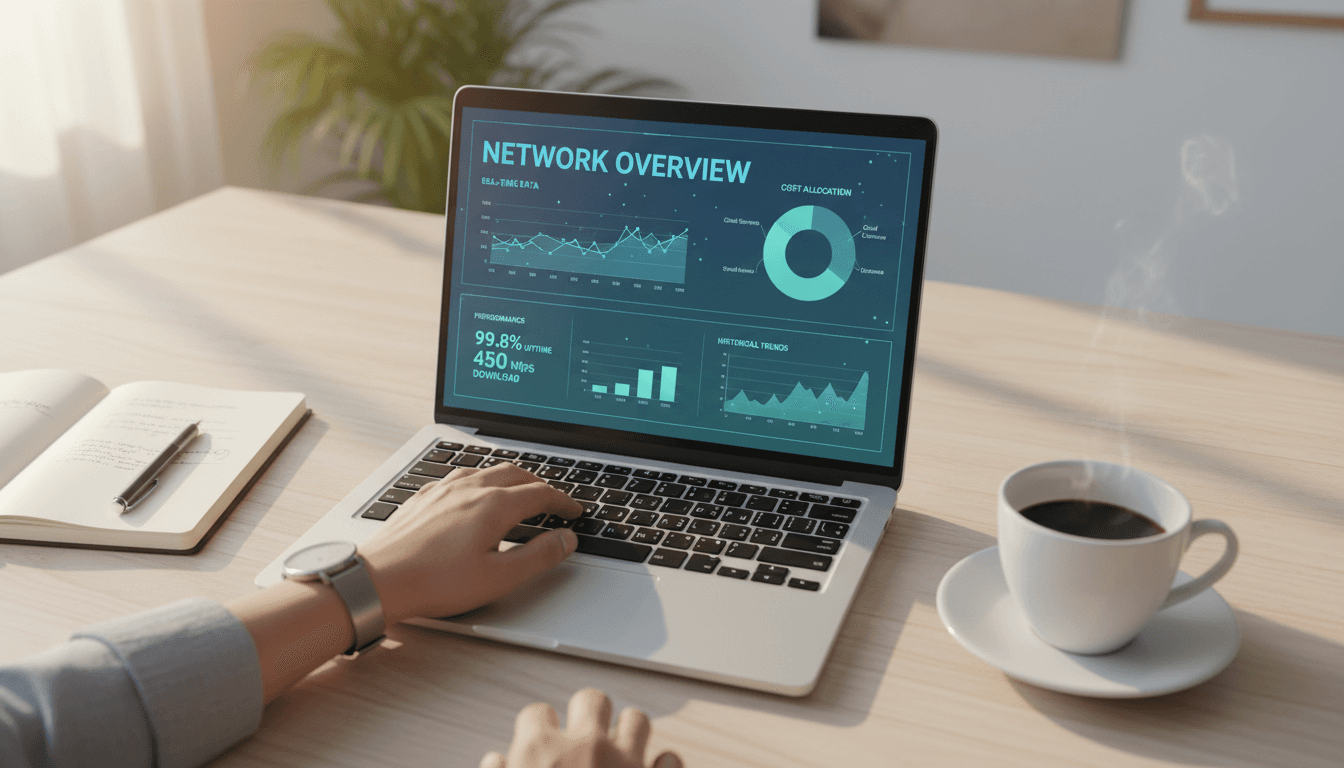
Small businesses achieve data-driven growth for small business 2026 by leveraging AI-powered analytics to personalize customer experiences and streamline operational workflows. By integrating predictive modeling and real-time data visualization, companies can identify high-value revenue opportunities while reducing overhead costs through smarter decision-making. This strategy transforms raw information into actionable plans that improve marketing ROI and overall profitability.
Many small business owners in 2026 find themselves buried under piles of digital information that yield zero actionable insights; this creates a frustrating reality where growth feels stalled despite a wealth of customer activity. The era of the simple spreadsheet has passed. Today, your ability to integrate fragmented systems and secure your data determines your market share. To compete with larger enterprises, you must transform raw inputs into predictable revenue streams. In this guide, we will analyze the modern analytics landscape and provide a clear, four step framework for data implementation. You will learn why infrastructure is your first priority, how to use cybersecurity as a competitive lever, and whether the investment in advanced analytics truly pays off for your bottom line.
The Competitive Landscape of Small Business Data Analytics in 2026
The landscape of small business operations is undergoing a fundamental transformation in 2026. For years, sophisticated data analytics was a luxury reserved for large enterprises with massive IT budgets and dedicated departments. Today, the democratization of AI powered tools and Software as a Service platforms has leveled the playing field for organizations with 5 to 50 employees. This shift marks 2026 as the tipping point where information becomes the primary driver of competitive advantage.
The old way of operating relied heavily on gut feelings and historical intuition. While experience is valuable, it cannot compete with the new way of real time insights that reflect current market conditions. Research indicates that data driven companies are 23 percent more profitable and 19 percent more productive than their peers. For the modern entrepreneur, professional digital solutions now provide the same level of clarity once exclusive to Fortune 500 firms.
In this context, data-driven growth for small business 2026 is defined as the strategic use of internal and external data points to refine operations, reduce waste, and identify new revenue opportunities. It is not about managing big data in the abstract; it is about leveraging specific, integrated insights to make precise adjustments that compound into significant financial gains. Businesses that fail to bridge this gap risk falling behind more agile, informed competitors.
Beyond the Spreadsheet: Transforming Raw Data into Revenue Streams
Transitioning from abstract statistics to a healthier bottom line requires moving beyond static reporting. In 2026, the true value of information lies in its ability to trigger automated, revenue generating actions. When implemented correctly, data-driven growth for small business 2026 manifests in three distinct operational areas that turn stored information into immediate cash flow.
Customer retention shifts from reactive damage control to predictive management. By analyzing purchasing patterns, you can identify churn signals before a customer even considers leaving. For example, if a recurring client typically interacts with your service platform five times a week but suddenly drops to once a week, an automated alert can prompt a personalized outreach or a targeted loyalty discount. This proactive approach saves the high cost of acquiring a replacement customer by intervening at the exact moment loyalty wavers.
Operational efficiency serves as the second pillar of revenue generation. Through secure automation solutions, businesses can track the exact lifecycle of a service delivery or product shipment. If data shows that project approvals are consistently stalled at the client review stage for an average of four days, you have identified a specific bottleneck. Streamlining this single point of friction reduces labor hours per project and accelerates the billing cycle, directly increasing the profit margin on every contract fulfilled.
Finally, data serves as a precise engine for upselling. Instead of broad marketing blasts, businesses can analyze SaaS usage data to pinpoint high-value opportunities. If a client is consistently hitting 90 percent of their data storage or user seat limit for three consecutive months, they are a validated candidate for a higher-tier solution. Providing this insight to your sales team allows them to approach the client with a consultative upgrade based on actual needs. This method significantly increases conversion rates compared to cold outreach, proving that data is an active asset rather than a passive record.
The Infrastructure of Insight: Why Connectivity and Security Come First

The mechanics of turning information into revenue depend entirely on the reliability of the underlying infrastructure. Data analytics is only as effective as the pipes it travels through and the vault where it is stored. For a modern SMB, achieving sustainable data-driven growth for small business 2026 is impossible without high performance connectivity and enterprise-grade cybersecurity. If your internet connection suffers from latency or frequent micro-outages, your real-time data feeds become fragmented. These data gaps often lead to "ghost trends" or incomplete pictures of customer behavior; this results in flawed business decisions based on partial information that may be minutes or hours out of date.
A fragmented tech stack, where connectivity, security, and software are managed by separate, uncoordinated vendors, creates inherent friction and increased risk. Every point of integration between disparate systems represents a potential failure point or a security vulnerability. By contrast, a fully integrated approach ensures that your secure automation solutions are natively compatible with your network protocols. This synergy minimizes technical friction and ensures that the flow of information from a point-of-sale system or a client portal to your analytics engine is instantaneous and protected.
The speed of the 2026 market necessitates a transition from manual batch processing to continuous, live streams. Maintaining a "vault" for your data is not just about locking files; it is about creating a hardened environment where data integrity is guaranteed from the moment of capture. When your infrastructure is designed as a single, cohesive unit, you eliminate the technical debt associated with troubleshooting mismatched components, allowing your team to focus on the insights that actually scale the business.
A Four Step Framework for Implementing Data-Driven Decision Making

Implementing a strategy for data-driven growth for small business 2026 does not require a complete overhaul of your current operations. Instead, success comes from a structured, phased approach that prioritizes high impact changes. Following this four step framework allows you to move from data collection to actionable intelligence without overwhelming your internal resources.
Step 1: Define specific growth goals. Broad objectives like "increasing sales" are too vague for an analytical model. You must set granular targets, such as increasing repeat orders by 15 percent or reducing customer onboarding time by two days. These specific benchmarks dictate exactly which metrics you need to track and prevent the collection of irrelevant noise.
Step 2: Audit your existing data sources. Most businesses already possess a wealth of information scattered across various platforms. Document where your data currently lives; this includes your CRM, website traffic logs, point of sale systems, and even customer support ticket histories. Identifying these silos is the first step toward consolidation.
Step 3: Select the right tools for integration. Focus on SaaS solutions that offer robust API capabilities. This allows your different software platforms to communicate automatically, ensuring that your secure automation solutions can pull fresh data without manual entry. Utilizing professional digital solutions that prioritize interoperability prevents the technical friction that often stalls digital transformation.
Step 4: Establish a rhythm for review. Data loses value if it is only examined once a quarter. Set a weekly or bi-weekly schedule to analyze performance against your goals. To avoid analysis paralysis, focus on exactly three key performance indicators (KPIs) at the start. For many, these are Customer Acquisition Cost, Lifetime Value, and Churn Rate. By limiting your initial scope, you ensure that your team remains focused on the levers that actually move the needle for your bottom line.
Data Privacy and Cybersecurity as a Competitive Advantage

As your organization scales its analytical capabilities, the volume of sensitive information you store increases proportionally. This expanded digital footprint transforms a small business into a high-value target for cybercriminals. However, viewing security solely as a defensive cost is a mistake. In 2026, robust data protection serves as a primary differentiator. When you demonstrate that your data-driven growth for small business 2026 is built upon enterprise-grade cybersecurity, you transform a regulatory obligation into a powerful marketing asset.
Establishing trust is the new currency of the digital economy. Prospective clients, especially in the B2B sector, now perform rigorous digital due diligence before signing contracts. By proactively showcasing your adherence to security best practices, such as end-to-end encryption and strict data governance, you remove friction from the sales process. Implementing a Zero Trust architecture is a critical trend for 2026. This framework operates on the principle of "never trust, always verify," ensuring that every request for data access is authenticated and authorized regardless of whether the request originates inside or outside your network.
Beyond securing the perimeter, professional digital solutions allow you to provide customers with transparent privacy controls. This transparency builds a brand reputation for integrity that competitors with fragmented security protocols cannot match. Integrating secure automation solutions to manage data deletion requests or access logs further streamlines compliance with evolving privacy laws. When your infrastructure is as resilient as your insights are sharp, security ceases to be a burden and becomes the foundation upon which you win larger, more profitable contracts.
Is Small Business Data Analytics Worth the Investment in 2026?
The short answer is yes; the return on investment for data-driven growth for small business 2026 far outweighs the initial setup costs. While the big data market is scaling toward a $447 billion valuation this year, small businesses gain the most value through small data insights. This concept debunks the myth that you need massive datasets to see results. Analyzing just 50 consistent customer interactions can reveal more about your profit margins than a million random data points from a disparate source.
A rigorous cost benefit analysis shows that the price of professional digital solutions is offset by the elimination of wasted marketing spend. Without analytics, businesses often overspend on customer acquisition for segments with low lifetime value. Predictive analytics further shifts your stance from reactive to proactive; you can anticipate market trends and inventory needs before they impact your cash flow.
The cost of inaction is perhaps the most significant risk. Failing to utilize secure automation solutions means your team remains buried in manual reporting while competitors use real time dashboards to capture your market share. When backed by enterprise-grade cybersecurity, these tools ensure that your investment is protected from the rising costs of data breaches, making analytics a sound and necessary financial pillar for any business focused on longevity.
As we look toward 2026, the ability to transform raw business data into actionable revenue streams will define the success of small enterprises. This process requires more than just gathering information; it demands a strategic approach to organization and protection. If you find the technical aspects of this journey overwhelming, GlobalinkIT is here to support you. Protecting your digital assets is a vital part of growth, and prioritizing Cybersecurity ensures your data remains both profitable and secure. Let us help you navigate these complexities with confidence.