Achieving ransomware business continuity small business resilience requires implementing a 3-2-1 backup strategy, maintaining offline data copies, and developing a formal incident response plan. By prioritizing multi-factor authentication and regular recovery testing, organizations can minimize downtime and maintain core operations during an active cyberattack.
Imagine walking into your office only to find your critical systems locked and a ransom demand on every screen. For a small business, this moment represents more than a technical failure; it is a direct threat to your reputation and long term survival. While large corporations may have the resources to absorb weeks of downtime, a local enterprise often faces permanent closure after just a few days of total operational paralysis. True resilience requires shifting your focus from simple data recovery to comprehensive business continuity. This guide outlines the practical steps needed to stay operational during a cyberattack. We will explore the nuances of the 3 2 1 1 backup strategy, the specific requirements for 2026 cyber insurance, and the automated tools that allow your team to maintain productivity when every hour counts toward your recovery.
The Sobering Reality of Ransomware for Small Businesses in 2026
The cybersecurity landscape for American small businesses has shifted from a theoretical risk to a persistent operational reality. In 2025 alone, ransomware attacks against smaller organizations surged by 34 percent, and current data suggests a digital incident now occurs every 7 seconds. For the modern US enterprise, a ransomware attack is no longer a matter of if, but when. This high frequency creates a massive financial burden, as the average loss from a single breach has climbed to $254,000.
When you compare this quarter-million-dollar price tag to the predictable investment required for proactive ransomware business continuity small business planning, the strategic choice is clear. At GlobalinkIT, we specialize in helping organizations transition from reactive defense to resilient, data-driven operations. Our approach integrates comprehensive cybersecurity solutions with secure connectivity and automation to ensure that your business remains functional even while remediation is underway.
For a small team, the typical recovery window is often too long to survive; our goal is to ensure that an attack is merely a manageable technical hurdle rather than a catastrophic financial failure. By understanding the specific pressures of the US business environment, we provide the technical framework necessary to survive a threat landscape that targets smaller firms with increasing precision.
Business Continuity versus Disaster Recovery: Understanding the Difference
To survive these targeted attacks, a firm must distinguish between recovering data and maintaining operations. Many leaders use the terms Disaster Recovery (DR) and Business Continuity (BC) interchangeably, but they serve distinct functions within a security posture. Disaster Recovery is a technical subset of security focused on the restoration of data, software, and hardware after an event. It is the process of getting your files back from a backup.
In contrast, Business Continuity is the broader strategy of keeping the doors open and the lights on while that technical recovery happens. While DR focuses on the IT infrastructure, BC focuses on the business processes. A proper ransomware business continuity small business plan ensures that employees can still communicate with clients and process orders even if the primary server is being sanitized.
Feature | Disaster Recovery (DR) | Business Continuity (BC) |
|---|---|---|
Primary Goal | Data and system restoration | Operational uptime and resilience |
Focus Area | IT infrastructure and servers | Business processes and personnel |
Key Metric | Recovery Point Objective (RPO) | Recovery Time Objective (RTO) |
Outcome | Restored digital assets | Uninterrupted service delivery |
Small businesses often fail because they prioritize the backup over the uptime. To bridge this gap, GlobalinkIT implements the 1 10 60 rule of cybersecurity: 1 minute to detect an intrusion, 10 minutes to investigate the scope, and 60 minutes to remediate the threat. Most SMBs lack the visibility to meet these benchmarks, leading to failed IT compliance and regulatory assessments. By shifting focus from simple recovery to active continuity, you ensure that a technical breach does not become a total operational standstill.
The True Cost of Downtime: Why Every Hour Counts
Understanding the financial stakes of an attack requires looking past the ransom demand itself. Current research indicates that the average downtime following a ransomware event is now 24 days. For a US small business, the immediate fiscal impact is staggering, with costs potentially reaching $53,000 per hour of operational inactivity. These expenses accumulate through several distinct channels that often go uncalculated until a crisis occurs.
Payroll remains a fixed cost even when employees are unable to access the tools they need to work. Beyond lost productivity, missed sales opportunities during a multi-week outage frequently drive long-term customers to more reliable competitors. Perhaps most damaging is the erosion of trust; reputational harm often outlasts the technical recovery. A robust ransomware business continuity small business strategy must focus on minimizing the Recovery Time Objective (RTO) to stop these financial leaks.
GlobalinkIT mitigates these drains through an integrated technology stack. By weaving business automation solutions into your security framework, we enable critical processes to continue even during remediation. Our approach focuses on shifting the recovery timeline from weeks to hours. By reducing the RTO, we ensure that a security incident does not evolve into a terminal financial event for your company, protecting both your immediate cash flow and your long-term brand integrity.
The 3 2 1 1 Backup Strategy: Your Last Line of Defense

Achieving a low recovery time objective depends entirely on the integrity of your data archives. While the traditional 3-2-1 backup rule served as the gold standard for years, the 2026 threat landscape requires a more robust evolution. The classic framework dictates maintaining three copies of your data, using two different media types, with one copy stored offsite. However, because 68 percent of ransomware attacks now actively target and attempt to corrupt backups to prevent recovery, GlobalinkIT implements the 3-2-1-1 strategy.
Strategy Component | Requirement | Purpose in 2026 |
|---|---|---|
3 Copies | Primary plus 2 backups | Redundancy against hardware failure |
2 Media Types | e.g., Cloud and Local Disk | Protection against medium specific bugs |
1 Offsite | Geographic separation | Safety from local physical disasters |
1 Immutable | Object Lock / WORM | Prevention of unauthorized encryption |
The addition of immutable storage provides the definitive last line of defense. Unlike standard cloud storage, immutable backups are configured with a Write Once Read Many (WORM) policy. This means that once data is written, it cannot be altered, encrypted, or deleted for a set duration; even if an attacker gains administrative access to your network, they cannot destroy these files.
This is a critical technical gap often overlooked in basic security guides that focus only on the location of data rather than its state. By integrating immutability into comprehensive cybersecurity solutions, small businesses ensure they always have a clean, uninfected restoration point. This technical safeguard transforms a potentially fatal data loss event into a standard restoration procedure, maintaining the integrity of your ransomware business continuity small business plan and ensuring that your data remains an asset rather than a liability during a crisis.
Step by Step Ransomware Incident Response for Small Teams
When the 3-2-1-1 strategy provides your safety net, a tactical response plan provides your operational roadmap. Following a framework aligned with CISA (Cybersecurity & Infrastructure Security Agency) guidelines ensures your team acts with precision rather than panic. This structured approach is essential because a documented Incident Response Playbook is now a mandatory requirement for most cyber insurance policies in 2026.
Isolation: If a workstation shows signs of infection, disconnect it from the network immediately. Do not power the machine down. While it seems counterintuitive, keeping the device powered on preserves volatile memory (RAM). This data often contains encryption keys and forensic evidence that can be vital for recovery. Physically unplug the ethernet cable or disable the Wi-Fi adapter to prevent the spread to other segments.
Identification: Determine the scope and locate "Patient Zero." Use your security logs to identify which account was compromised and the specific ransomware variant involved. Knowing the strain helps technical partners determine if decryption tools are available or if the variant is known for specific data exfiltration tactics.
Containment: Broaden your perimeter to stop the lateral movement of the malware. This involves disabling compromised accounts, disconnecting shared storage, and pausing automated syncs to cloud environments. This step is where IT compliance and regulatory assessments prove their worth, as you will need an accurate inventory of all connected assets to ensure no segment is left exposed.
Eradication: Once the threat is contained, the infected systems must be wiped and rebuilt from known clean images. Do not simply delete files; a full format and OS reinstallation is the only way to ensure hidden backdoors are removed.
Implementing this playbook as part of a ransomware business continuity small business strategy ensures that each team member knows their specific role during a crisis. GlobalinkIT assists firms in developing these protocols to ensure they meet the rigorous technical standards required for modern insurance and comprehensive cybersecurity solutions, turning a potential disaster into a managed technical event.
How Secure Connectivity and Automation Support Business Continuity
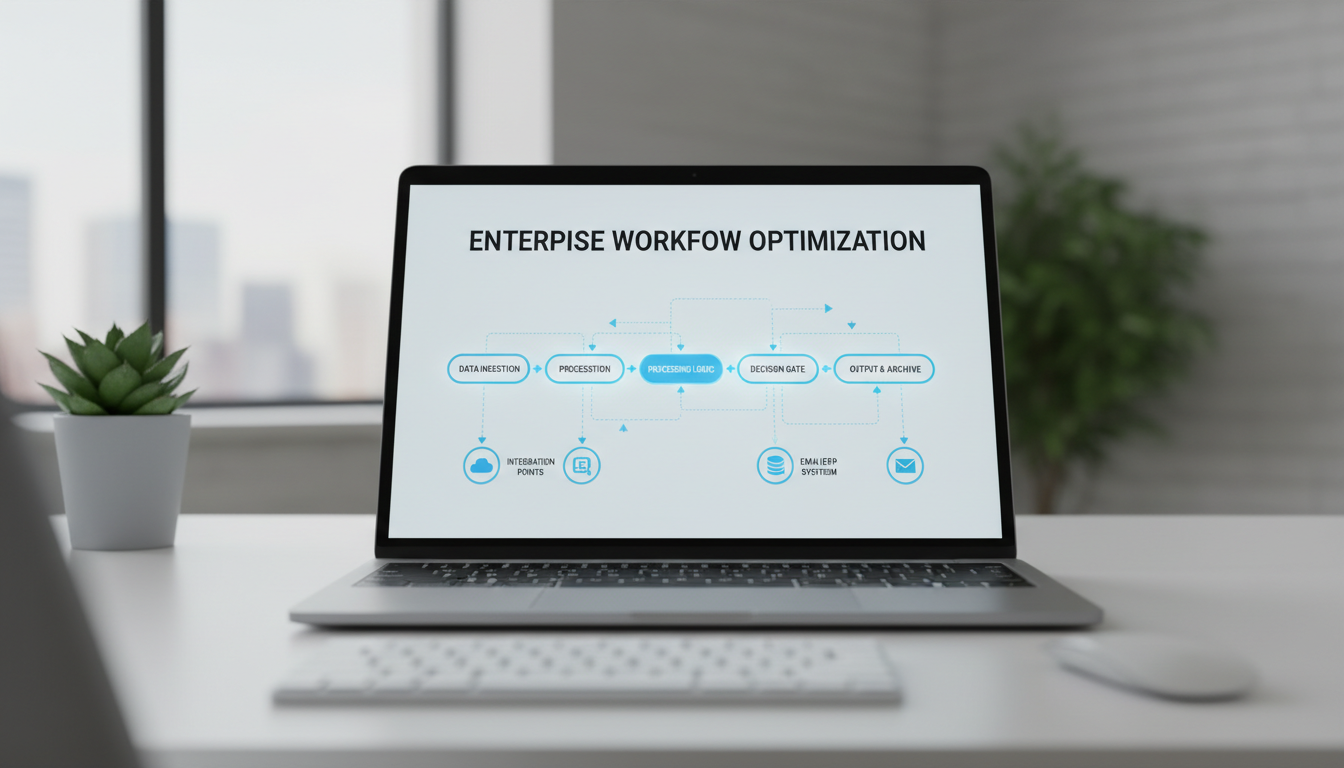
Manual intervention is the primary bottleneck in most response plans. By integrating business automation solutions into your ransomware business continuity small business strategy, you remove human latency from the response chain. Automated workflows can trigger pre-defined isolation protocols the moment a threat is detected, instantly severing a compromised device's access to the core server while preserving its connection for forensic analysis. This rapid response is the technical manifestation of the 1-10-60 rule, ensuring containment happens in seconds rather than hours.
This is where secure connectivity becomes an operational lifeline. Utilizing Dual-WAN or SD-WAN configurations allows your team to maintain access to critical cloud-based SaaS tools even if the primary local network is undergoing remediation. If one network segment is isolated to contain a breach, GlobalinkIT’s approach routes essential traffic through a secure, secondary line or an isolated guest network.
Connectivity Solution | Continuity Benefit |
|---|---|
SD-WAN | Dynamic traffic routing to keep SaaS tools online |
Dual-WAN | Physical redundancy if one ISP link is compromised |
Automated Isolation | Instant segmentation to stop lateral movement |
This ensures that your customer support, sales, and communication channels remain live. Combining resilient internet with smart automation means your business continuity isn't just a document on a shelf; it is an active, technical capability that keeps your firm productive during a crisis.
Meeting Cyber Insurance Requirements in 2026

Insurance providers in 2026 have moved from simple questionnaires to rigorous technical audits. Currently, 73 percent of small to medium businesses fail to meet the baseline requirements for cyber coverage. Securing a policy now demands specific technical controls that many firms overlook. Carriers prioritize three non-negotiables: Multi-Factor Authentication (MFA) across all remote access points, Endpoint Detection and Response (EDR) to monitor for anomalous behavior, and a rigorous, documented patch management schedule.
Requirement | Strategic Function |
|---|---|
MFA | Validates identity to prevent credential stuffing |
EDR | Real-time threat hunting and automated isolation |
Patch Management | Closes vulnerabilities before they are exploited |
Beyond these controls, underwriters are scrutinizing the maturity of your ransomware business continuity small business strategy. If you cannot demonstrate a proven Business Continuity Plan (BCP), you face a forecasted premium increase of 15 to 20 percent. This financial penalty reflects the higher risk of a total loss when recovery depends on logic rather than luck. GlobalinkIT serves as a technical consultant to bridge this gap. We ensure your infrastructure aligns with comprehensive cybersecurity solutions that satisfy insurers. By conducting IT compliance and regulatory assessments, we help you secure favorable terms while hardening your defenses against the evolving threat landscape.
Maintaining operations during a ransomware attack requires a blend of proactive defense, robust backups, and a clear response plan. While preparation is your best defense, managing these technical layers can be overwhelming for small business owners. If you want expert help to fortify your systems and ensure your data remains protected, exploring our Cybersecurity solutions is a great next step. We can help you build a resilient infrastructure that keeps your business running, regardless of the threats you face.